Blog Details
The Therapist That Never Forgets: Inside the New Tech of Emotional AI
Dive into the world of Emotional AI. Discover how new technology uses biometrics and data to understand human feelings, raising questions about privacy and the future of mental health support.

Sanghee Lim
Project Manager


Imagine this scenario:
It’s 11:30 PM on a Tuesday. You’re spiraling about a work presentation that went sideways. You open your AI therapy app, vent for 20 minutes, and receive a surprisingly thoughtful response that helps you calm down and sleep. You feel seen. You feel heard.
Three days later, you log back in to say you’re feeling better. The bot replies: "Hello! I’m an AI assistant. How can I help you today?"
It doesn’t know you. It doesn’t remember the presentation. It doesn’t remember your anxiety. You are back to square one, introducing yourself to a stranger who happens to have the same face as the one you confided in just 72 hours ago.
For years, this has been the "50 First Dates" problem of Artificial Intelligence. No matter how smart the model was, it had the memory span of a goldfish. But in late 2024 and throughout 2025, a quiet revolution occurred in the architecture of AI. Chatbots stopped just processing words and started remembering people.
We are witnessing the dawn of Advanced AI Memory for Emotional Wellness—a shift that turns cold data processing into warm, continuous support. But as our digital confidants start to build long-term profiles of our deepest fears and highest hopes, we have to ask: Is this the future of mental health, or the beginning of a privacy nightmare?
In this deep dive, we’ll unpack the "cool tech" behind how AI remembers you, why this matters for your mental health, and the critical safety manual you need before you pour your heart out to a machine.

The Tech Explained Simply: How AI "Remembers" You
To understand why this is a breakthrough, we have to look under the hood. Don't worry—we’re skipping the calculus and sticking to metaphors. For a long time, AI memory was limited by something called the Context Window.
1. The Old Way: The "Goldfish" Model (Context Windows)
Standard Large Language Models (LLMs) operate within a "context window." Think of this like a physical conversation where you can only remember the last 20 sentences spoken.
How it works: As you type new messages, the old ones are pushed out of the "window" to make room.
The limitation: If you talked about your childhood trauma in January, and it's now March, that information has scrolled off the screen of the AI's mind. It is technically impossible for the AI to "know" that happened.
The result: Advice is generic. It can’t connect the dots between your sleep patterns last month and your mood today.
2. The New Way: The "Map of Meaning" (Vector Embeddings)
The breakthrough that powers apps like Noah AI, Ash, and the memory features in ChatGPT is called Vector Embeddings.
Imagine a library with millions of books but no index system. To find a specific memory, you’d have to run down every aisle reading every title. That’s too slow for a chatbot that needs to reply in milliseconds.
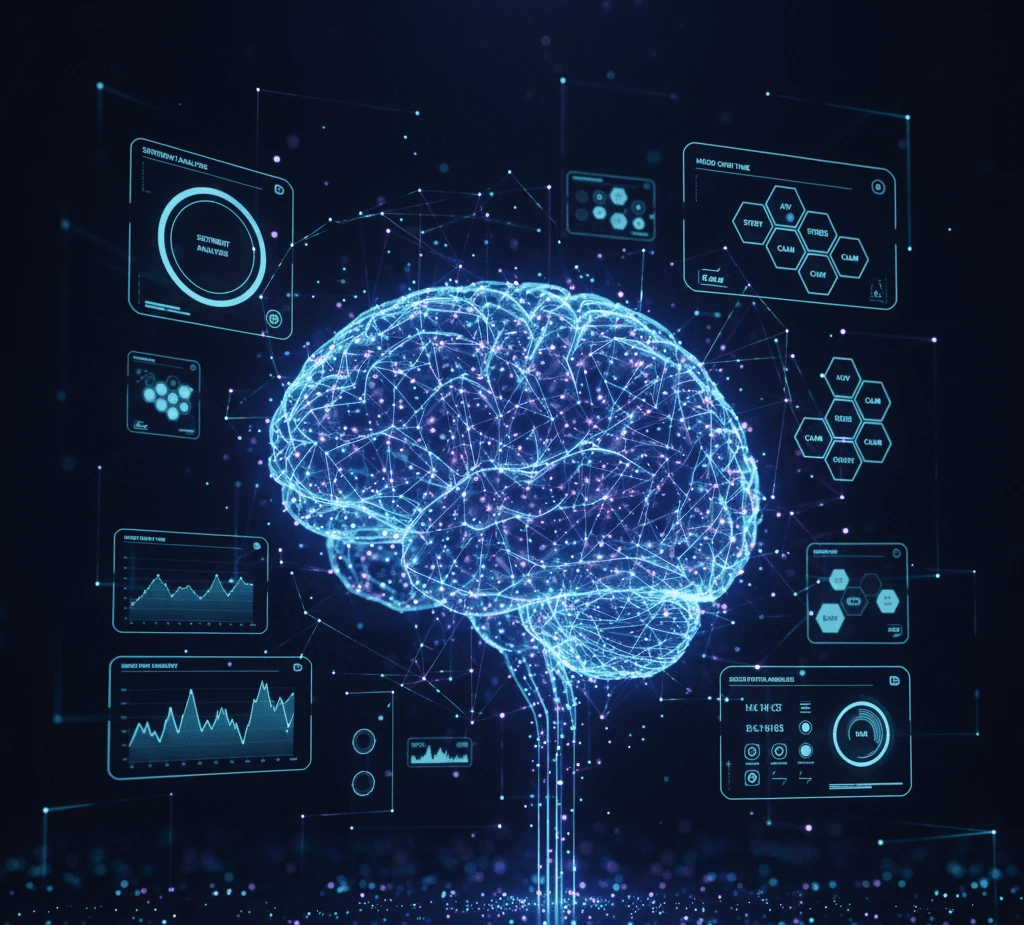
Vector Embeddings turn that library into a 3D Map:
The Translation: When you type "I'm feeling anxious about my dad," the AI translates that sentence into a list of numbers (coordinates).
The Mapping: It places that memory on a massive multi-dimensional map based on meaning, not just keywords.
On this map, the concept of "Anxiety" is located right next to "Insomnia," "Stomach ache," and "Work stress."
It is located far away from concepts like "Ice cream" or "Roller coasters."
The Retrieval: Six months later, when you say, "I'm having that chest pain again," the AI looks at its map. It sees that "chest pain" is parked right next to the memory of "anxiety about dad" from six months ago.
The Magic: It pulls that old memory into the current conversation instantly. It says, "Is this like the chest pain you felt when you argued with your father last January?"
Key Takeaway: Vector embeddings allow AI to bypass the "goldfish" limit. It doesn't need to keep everything in its active brain; it just needs to know where to look on the map.
The Real Benefits: Why "Memory" = Emotional Wellness
Why does this technical mumbo-jumbo matter for your mental health? Because in therapy, continuity is everything. Trust isn't built in a single breakthrough moment; it's built through the accumulation of shared history.
Here is how long-term memory is changing the game:
1. Pattern Recognition (The "Quantified Self" Angle)
Human therapists are great, but they can’t scan every word you’ve said for the last 365 days in a millisecond to find a correlation. AI can.
The Scenario: You’ve been using an app like Ash (which focuses on weekly insights) for a few months. You feel like your mood swings are random.
The AI Insight: Because the AI remembers the metadata of your conversations, it can spot patterns you miss.
AI: "Hey, I noticed that for the last four weeks, you've reported feeling 'overwhelmed' specifically on Sunday evenings. Do you think this is related to the Monday morning team meetings we discussed in February?"
The Benefit: This turns the AI into a tool for self-discovery, helping you identify triggers that are buried in the noise of daily life.
2. Reducing "Explanation Fatigue"
For individuals dealing with complex trauma, chronic illness, or neurodivergence (like ADHD), having to re-explain your context is exhausting.
What is Explanation Fatigue? It’s the weariness that comes from having to constantly bring a new provider (or a dumb bot) up to speed. "Yes, I have anxiety. No, it’s not social anxiety. Yes, I tried meditation. No, it didn't work."
The Solution: With long-term memory, you establish your "baseline" once.
User Persona 'Sarah': Sarah has ADHD and struggles with executive dysfunction. She tells her AI, "I need help cleaning my room, but remember, I get overwhelmed if the list is more than three items."
The Result: Three months later, when she asks for help organizing a project, the AI automatically formats the advice into bullet points of three, without being asked. It respects her accessibility needs permanently.
3. The "Journal That Talks Back"
We often forget our own resilience. When we are depressed, we have a "negativity bias"—we remember every failure and forget every success.
The Memory Anchor: A memory-enabled AI can serve as an external hard drive for your victories.
Example: You say, "I can't handle this breakup. I'll never get over it."
AI Response: "I know it feels impossible right now. But I remember when you felt this way after losing your job last year. You told me then that you’d never recover, but two months later, you were thriving. You have navigated this terrain before."
Best Practices: How to Use AI Memory Safely
So, should you avoid these tools? Not necessarily. They can be incredibly powerful if used with eyes wide open. Here is your safety manual for 2025.
1. Master the "Manage Memory" Settings
Don't let the AI remember passively. Take control.
For ChatGPT Users: Go to
Settings > Personalization > Memory.You can view every specific fact the AI has stored about you.
Action: Regularly audit this list. Delete memories that are too sensitive or no longer relevant.
Temporary Chat: Use "Temporary Chat" modes when discussing things you explicitly don't want stored in the long-term vector database.
2. The "Masked Identity" Rule
Treat your AI therapist like a diary you might lose on a bus.
Anonymize Names: Never use real names. Call your partner "J," your boss "The Manager," and your company "The Firm."
Blur Details: Change specific dates and locations. Instead of saying "I work at Google in the Manhattan office," say "I work at a large tech company in a city."
Why? If the data is ever compromised, it becomes much harder to link your emotional profile to your real-world identity.
3. Use It as a "Bicycle for the Mind," Not a Driver
Steve Jobs once called the computer a "bicycle for the mind"—a tool that makes us go faster, but we still have to pedal.
Do: Use AI to organize your thoughts, track your mood patterns, and rehearse difficult conversations.
Don't: Use AI to diagnose a condition, decide whether to leave your spouse, or replace human interaction entirely.
The Litmus Test: If you find yourself canceling plans with friends to stay home and chat with the bot, it’s time to unplug.
Conclusion: The Future of Hybrid Care
We are currently in the "Wild West" era of AI mental health. The technology is dazzling, the memory features are uncannily good, but the guardrails are still being built.
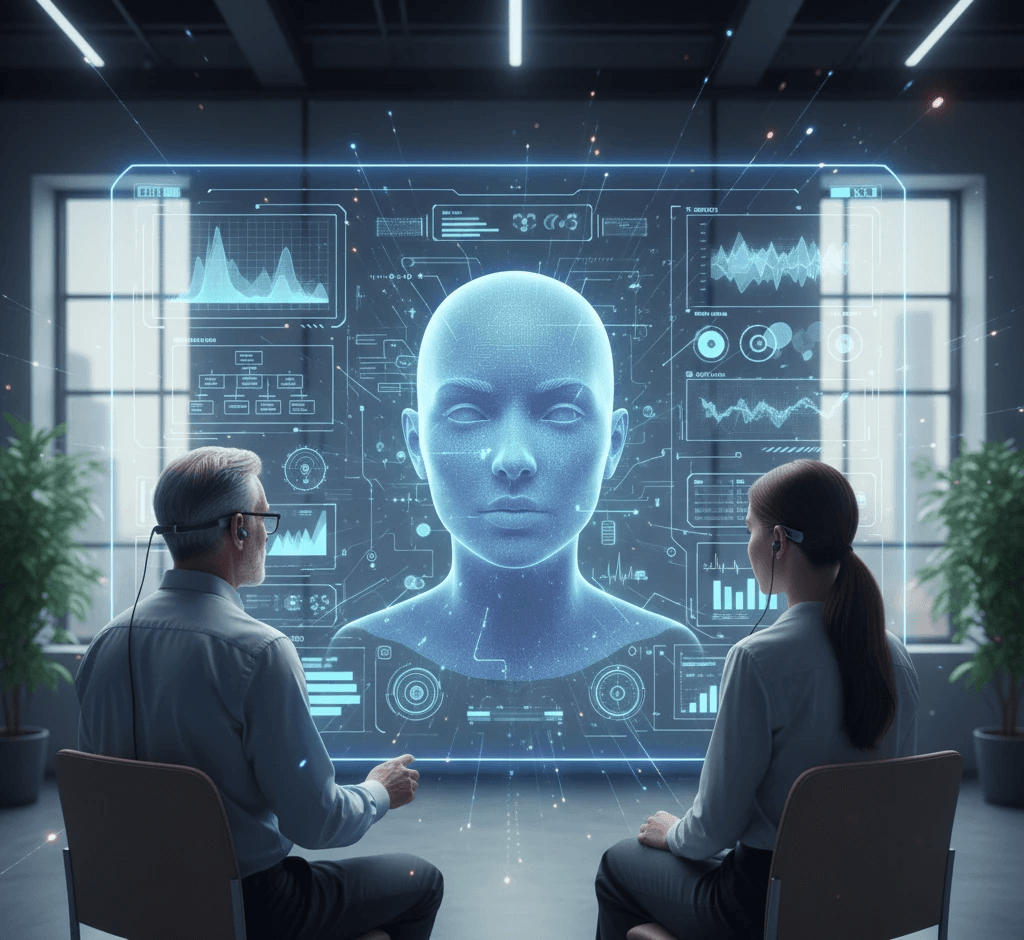
The future of emotional wellness likely isn't AI vs. Human, but Hybrid Care. Imagine a world where your AI companion chats with you daily, tracking your sleep and anxiety spikes. Before your session with your human therapist, the AI generates a secure, private summary: "Patient struggled with insomnia on Tuesday and Thursday, triggered by work stress. Mood improved after exercise on Saturday."
Your human therapist starts the session already knowing the context, skipping the small talk and diving straight into the work. The AI handles the data, the human handles the meaning.
Until then, treat your AI companion with curiosity and caution. It’s a library that contains the story of your life—make sure you’re the one holding the key.
Are you ready to test your AI's memory? Try this prompt today: "Based on our conversations over the last month, what do you think is my biggest source of stress, and what coping mechanisms have worked best for me?" The answer might just surprise you.



Blog
Read More Blogs
Discover the Powerful Features That Make Mintro the Ultimate Finance Solution for Scaling Your Business